
No Deposit Bonus Casino Canada Ontario: Top Casino Offers, Free Spins & Bonuses
 King Billy
Ranked ahead of the rest
50 free spins
set aside for Buffalo Tornado
- Clear it at40x
- You can take homeCAD 75
 Katsubet
- Clear it at45x
- Value behind a spinCAD 0.20
- You can take homeCAD 75
 7Bit Casino
Longest run of spins
75 free spins
set aside for Lucky Crown Spins
- Clear it at45x
- Value behind a spinCAD 0.20
- You can take homeCAD 120
 Ivibet
50 free spins
set aside for Miss Cherry Fruits Jackpot Party
Credited on its own
- Clear it at3x
- Value behind a spinCAD 0.25
- You can take homeCAD 25
 Slotoro
- Clear it at5x
- Value behind a spinCAD 0.20
- You can take homeCAD 25
 HitNSpin
- Clear it at3x
- Value behind a spinCAD 0.10
- You can take homeCAD 10
 Mirax Casino
- Clear it at60x
- Value behind a spinCAD 0.20
- You can take homeCAD 30
 Verde Casino
50 free spins
set aside for Book of Sirens
Credited on its own
- Clear it at3x
- Value behind a spinCAD 0.20
- You can take homeCAD 25
 V.Vegas
- Clear it at3x
- Value behind a spinCAD 0.20
- You can take homeCAD 25
 Magic365
- Clear it at30x
- You can take homeCAD 50
 HellSpin
50 free spins
set aside for Lady Wolf Moon Megaways
Credited on its own
- Clear it at3x
- Value behind a spinCAD 0.25
- You can take homeCAD 25
 Ice Casino
50 free spins
set aside for Book of Fallen
Credited on its own
- Clear it at3x
- Value behind a spinCAD 0.20
- You can take homeCAD 25
 SlotsGem
50 free spins
set aside for Lady Wolf Moon Megaways
Credited on its own
- Clear it at3x
- Value behind a spinCAD 0.25
- You can take homeCAD 25
Some of what an offer does is settled the moment promotional value lands in the account. The number of rounds credited is already decided. The slot they belong to, where the terms name one, is decided too. The wagering condition is published before anyone claims, and so is any string the claim depends on. None of those moves again afterwards, whatever happens next.
What is not settled is everything downstream of that point. How the rounds are played, how far a requirement is worked through, whether a request is ever made and what the account’s own province allows are all open when the value arrives.
Those things are decided by different authorities: some by what the operator has published, some by a local framework, some by the holder. Telling them apart is the practical work of holding a credited no deposit bonus, and knowing which document answers which question is most of that work.
What a no deposit bonus is and what it credits
Two features define the category, and both are visible before anything is claimed. Value appears in the account under whichever label the operator applies to it, and nothing has gone the other way to earn it.
Everything after that is a condition written around the credit rather than part of the credit itself, which is why a reader who already holds one is working with conditions rather than with an amount. The distinction decides where an answer has to be looked for: the credit is a fact about the account, and everything governing it is a document.
The credited quantity comes in one of two documented shapes. It can be a set number of free spins pinned to whichever slot the terms identify, in which case the quantity is counted in rounds and the figure behind each round may or may not be recorded. Or it can be promotional credit entered as an amount, staked across whatever the terms allow.
Either shape amounts to a starting position, not a balance that can be asked for, and the clauses published beside it are what stand between the two. Which shape is in play is printed next to the offer itself, and it changes the first question a holder has to ask about it.
Set against a deposit-linked bonus the difference is narrow, but it matters here. A deposit-linked award is scaled to a transfer, so part of the resulting balance is money the holder sent, and the award moves with it.
A credit of this kind has no transfer behind it, which means the published conditions carry the full weight of deciding what it becomes. Functionally the arrangement lets promotional play begin before a qualifying payment, and the supplied material supports nothing further about why an operator runs one.
Types of offer a casino can credit without a payment
Spins attached to an assigned slot are the shape the documented material carries most widely. The terms fix the count and name the game, and the figure behind one spin is recorded at some operators and not at others. Nothing about that shape is decided by the holder except how the spins are used once they arrive.
Promotional credit works from the other end. An amount sits in the bonus balance and the terms govern which categories it can be staked across, so the opening question stops being which slot applies and becomes which amount the conditions run on instead.
The no-wagering case is the arrangement the record shows in which what that credit produces carries no requirement. That leaves the other published clauses (a withdrawal cap, an assigned game, an eligibility rule) in force regardless.
Two further formats are documented. A batch-release offer releases the quantity in stages instead of all at once, so a schedule sits beside the total and the account’s position shifts as each stage arrives. An offer drafted for existing account holders keeps the no-payment mechanic intact and points its eligibility clause at someone who already holds an account.
Read as a set, what each one provides is a fixed quantity of play requiring no transfer, and the limitation sits in whatever has been attached to it rather than in the credit itself. Which format a given document uses is printed with the offer, settled well before a holder sees it. None of these formats is presented here as preferable to another, and not every one of them turns up among the ten offers appearing further down.
Promotions that resemble a no deposit bonus but are not
Cashback, sometimes written as a loss rebate, is calculated from losses already taken inside a stated period. Both staking and funding come before the award exists, and the figure comes out of a play record instead of being printed in advance, which places it outside the category whatever its size.
A referral bonus fails the same test from a different direction: the award follows from a third party registering or playing, so the trigger lies beyond the account itself.
The deposit-linked family is the larger one. With a match, the award is scaled to a transfer; with a reload, to a later transfer on an account already open. In both, award and amount sent are arithmetically tied and neither is reachable until money has moved, so an advertised size tells a reader nothing whatever about what an unfunded account might receive by way of credit.
One question separates all of them from the subject here: whether something else has to come first for the value to exist at all, whether a transfer, a recorded loss or a third party. Where the answer is yes, the promotion belongs to another family, however closely its wording resembles a no-deposit offer.
Nothing in that distinction makes any of them better or worse, and none is ranked against another on this page; each simply begins from a different starting point. The conditions on any of them come from whichever document that promotion publishes, and nothing in this section transfers across the boundary between the families.
How an offer is activated: codes and automatic crediting
Activation is the step tying a published offer to one particular account, and it happens once. Where the terms publish a code, that string is the documented route, and those same terms fix when it goes in.
Six of the ten below publish one: FMIL30, FSBONUS100 at two brands, LUXE50, LIZARD and 30WW. Entering a published string at the stage its own document names is what completes the route as described. A promo code is not the offer, though: entering one attaches conditions already written and alters none of them.
For the remaining four the promo-code field is not documented in the project record, and one distinction decides how that is read.
An offer the material documents as credited with no code involved would be a positive statement about it. An undocumented field is not, and it will not stand in for no code needed, for nothing to enter, for activation happening by itself or for crediting happening by itself. Those four resolve on the operator’s own promotional pages, in whichever direction they happen to resolve, and not on a page summarising them.
A confirmation step after activation turns up in some documents, reaching the holder by email or shown inside the account itself. Where one appears it is that operator’s own step and no feature of the category, and where none appears none is described on this page.
No activation sequence is shared by all ten, which is the practical reason for reading the individual document instead of carrying a path over from a neighbouring brand. What a confirmation step does and does not establish belongs to that same document, and is read there rather than inferred.
Eligibility conditions a no deposit bonus can carry
Eligibility is settled before anything else, since it governs whether an offer can attach to the account in the first place. The clause belongs to the operator, and what it contains depends on the conditions published for that specific offer and that specific account rather than on any rule covering the category.
The supplied material does not document the eligibility criteria of the ten brands below, so this page attributes no particular restriction to any of them and invents none. Where such a clause goes undocumented, nothing has been established in either direction.
Eligibility is also the clause capable of making every other condition beside the point, since an offer unable to attach never reaches the stage where a requirement matters.
Registration details sit in the same frame and matter for a reason that only appears later. What is entered at registration is the reference a subsequent identity verification is measured against, so inaccurate details can create a discrepancy when that verification takes place, and the operator’s own process determines what follows from it.
That is a mechanical point rather than a warning, and getting those details right at the outset is among the few things in the sequence a holder wholly controls.
Age is not one of them. Every province and territory sets a threshold of its own, so the figure that applies depends on the province or territory a holder lives in rather than on anything the promotional wording says, and no operator’s terms can move it.
The same split runs through access more broadly: the offer’s own clause and the framework applying locally are separate tests, answered in separate documents, and a reader who treats them as one question will get the wrong answer to both. One test does not resolve the other, and a page of this kind resolves neither.
The assigned game and the studio credited for it
An assigned game functions as a condition rather than a suggestion. Name a title in the terms and the rounds belong to it, with play beyond that title governed by whatever the same document provides.
Nine of the ten below name a single slot. For one, the assigned game goes undocumented in the supplied material, which reports that record instead of opening a catalogue. Titles appearing in the record include Fruit Million, Aloha King Elvis, Wild West Trueways, Book of Ra Deluxe, Gold Rush with Johnny Cash, Panda Fortune Rush, Miss Cherry Fruits Jackpot Party, Lady Wolf Moon Megaways and Book of Dead.
A studio credit means one thing, which is the studio the record names as provider of that slot. Seven of the ten name one, with BGaming, Booming Games, Novomatic and Play’n GO appearing among them; for the remaining three the studio is not documented in the supplied material.
Quality, hit frequency, return to player, weighting and suitability for an open requirement cannot be read off a title or a provider name, and neither can volatility, so none of those is stated for a brand on this page. Volatility is a general property of slots, describing how results distribute across lengthy play instead of what a game returns in total, and no figure for it is attached to a named title.
The count and the figure behind one round are separate fields again, and multiplying them gives a nominal amount staked rather than anything received. Using figures invented for the illustration and tied to no brand, 25 free spins at CAD 0.40 each represent CAD 10 of nominal staked value.
That CAD 10 is what the operator puts into play on the holder’s behalf. It is not winnings, not cash in hand, not a balance that can be asked for, and not an expected result; a published ceiling measures something else again, and the two never meet.
What a no deposit bonus wagering requirement applies to
A wagering requirement sets out how much play has to go through before promotional value counts as something a request can be put against. Two published parts build it: an amount, and a figure worked against that amount. Neither one is readable off its counterpart, and neither is any use alone.
Eight of the ten below print the figure as a numeric multiple, while two set their condition down in words that stay in words. At the far end sits the no-wagering case, where none of this structure exists and the remaining clauses apply regardless.
Which amount a requirement is applied to
Only the operator’s terms answer the question of which amount the calculation runs on. Name the credited bonus and the requirement bites there; name what the rounds produced and it bites on that instead, with one multiple then yielding a markedly different volume.
None of the ten below records which of the two its own wording nominates, so no amount is tied to a brand anywhere here, and none is rebuilt out of a printed figure, because a multiple counts repetitions and never says what gets repeated.
Working out the volume of play required
With the amount named, the figure gives the volume and nothing further is needed. On inputs invented for the purpose and attached to no brand:
- Promotional balance nominated in the hypothetical terms: CAD 18.
- Figure those same terms state against it: 40x.
- Volume of play the two produce together: CAD 720.
Shift either of the two inputs and the result moves with that shift, so a single printed figure can ask very unequal amounts of two different accounts. Alone, a figure shows the construction of a requirement and never the total it comes to.
What limits play while a requirement runs
Two clauses govern play while the requirement stands, and they are not two readings of one rule. What proportion of a stake counts toward the requirement is fixed by game weighting, category by category as the terms draw them. Separately, a max bet per spin fixes the most that may go on one round while the requirement is open.
On hypothetical figures attached to no game, studio or brand, CAD 90 staked on a category weighted at 25 per cent records CAD 22.50 toward the requirement, which is the gap separating a stake from the part of it registering.
Neither a weighting rate nor a maximum stake is documented for the ten brands below, and no consequence of exceeding a maximum appears here either, since that sits in whichever document publishes the clause rather than in a general account of it.
Expiry rules on an offer
Expiry wording fixes a period during which an offer, or the value credited under it, stays usable on the terms that came with it. Where a document lays one down, two parts need reading together: its length, and the point the counting starts from.
Those parts can differ between offers printing an identical number of days, since one may count from the claim and another from the crediting itself, which is why a closing date can never be read from a duration alone.
The project record states no validity period for the ten offers below, so no brand on this page carries one and no figure is estimated in its place.
What follows when a window closes belongs to the same clause defining it, and the material supports no general statement on the point, so nothing is said about it here.
For one particular offer, the clause attached to that offer is the only place both halves of the answer appear, and the only place settling whether the window covers the credit, the play, or the two together. A holder therefore has a single document to consult, and consulting it early rather than late is the whole of what can be done about a window.
What happens to a bonus balance once the spins are used?
Two balances sit side by side for as long as an offer runs. The bonus balance carries promotional value under the published conditions. The real balance carries value against which a request can be made.
They support different actions, which is the practical reason for keeping them apart: one is for play while a requirement is open, the other is for a withdrawal, and movement from one to the other is governed by that offer’s own wording. A figure shown in one reveals nothing whatever about the other’s current contents.
Conversion is the name for that movement. Where a bonus is cashable, the terms let it cross along with what it produced; where it is not, the operator recovers it at that point and the winnings alone go forward.
Both are documented arrangements, and which applies is printed beside the offer rather than shared across the category. One requirement discharged under each arrangement can therefore end at two noticeably unlike sizes, through the drafting alone and nothing the holder did differently.
That is why discharging a requirement does not have one outcome. Meeting the stated volume satisfies the clause that sets it, and what is left afterwards is decided by the conversion wording, by any published ceiling and by whatever provision the terms make for the credited amount itself.
No figure is guaranteed by completion alone, and nothing on this page turns a satisfied requirement into a cash balance of a particular size. What a reader can do is read those three clauses together before a requirement is finished rather than afterwards, when the reading changes nothing.
Caps on what a no deposit bonus can pay out
A withdrawal cap is the ceiling a document publishes against a payout, and it answers nothing else. Five of the ten below publish a fixed cash figure: CAD 150 at Boho Casino and at Slots Gallery, CAD 75 at RollXO, CAD 8 at magic365, and CAD 38 at V.Vegas. Two give the figure as a multiple instead: ten times the bonus credited, at Fugu and at Martin Casino.
For three brands, SlotLounge, Ivibet and Slotsgem, no withdrawal cap is documented in the project record. That describes the material rather than the offer: it is no third form of ceiling, no absence of a limit, and no finding that a payout may travel any distance whatever. Whether a ceiling exists somewhere the supplied material never reached is for those three operators to say, and each entry reports the gap instead of reading something into it.
Nor is a unit attached to any of the published figures. The documented wording is the only thing establishing how a cap is measured, so none of the seven is described here as applying per request, per day, per offer or over the life of an account.
The two documented forms are not points on one scale and are not treated as though they were. A cash amount, and a multiple of something credited, measure unlike things, so neither is turned into the other, and a multiple is not resolved into dollars while the amount it works against goes unnamed.
Neither form is called better than the other, and a larger figure is not called a stronger offer. A ceiling is never read against a wagering figure either, because those clauses answer wholly unrelated questions.
Two figures from a hypothetical case, attached to no brand:
| Item | Figure in this hypothetical case |
|---|---|
| Converted balance | CAD 160 |
| Documented withdrawal cap | CAD 55 |
What the pair shows is that the converted balance and the documented cap are different figures, with the cap sitting below the balance in this case. Nothing further follows, and the two are not combined with one another here.
When can an operator ask to confirm identity?
Identity verification looks at the person behind the account rather than at the promotion sitting in it, and nothing fixes a single stage for it. Registration is one of the points it can be asked for, and only one.
Others recorded include the activation of a bonus, the moment before a deposit, the moment before a withdrawal, and a later stage where something prompts a further check. Those are documented possibilities, not steps every account passes through in one fixed order. Which of them lands on a particular account follows from the operator together with whichever framework applies to it, and the promotion itself makes neither legible.
No position in a sequence is claimed for it here. Nothing on this page says the check trails a requirement, holds back for a first request or lands just ahead of a payout, since the supplied material supports no such general position.
What gets asked for sits outside the record too, so no document list appears and no timescale is attached. KYC, where that term turns up elsewhere, is the same identity verification under a shorter name and adds nothing to it.
The published terms for one account at one operator carry the stage and whatever goes with it, and reading them ahead of a request is the part of all this staying with the holder rather than moving to anyone else. Nothing about the credit itself, sitting there in the account, brings that stage forward or pushes it back.
Requesting a payout on a no deposit bonus
Whatever an operator’s terms have fastened to a first request from promotional value is what that request meets, and no two documents fasten quite the same things.
One may return a payout by the same route that funded the account, which puts an obvious question to an account funded by nothing, and the clause answering it is the operator’s. Another may allow fewer routes out than it accepts in. A third may want a qualifying transfer before a request against promotional value goes through.
Not one of those appears here as a rule for the category, because not one of them covers it. Each is a condition carried by some documents and absent from others, and whichever is printed beside that account’s own offer is what governs a particular request.
Where identity verification has been asked for and remains outstanding, the material supports a payout being held rather than the promotion itself ending. Those two outcomes call for two different responses. A hold is normally answered by sending in whatever was asked for, while a promotion coming to an end is drafted brand by brand, in a clause belonging to that offer alone.
Timing, fees and minimum amounts for a request are not documented for the ten brands below, so none is stated. What a page can describe is the kind of clause deciding the matter, never the result that clause produces inside one particular account.
For a reader holding an offer now, the route clause repays reading at the same moment as the published withdrawal cap, since both bear on one request from different sides. Locating the pair before a first request goes in beats locating them after one has been refused.
Payment methods and the conditions attached to them
Bank-linked methods are the first group where conditions are worth separating from availability. The supplied material records Interac debit and Interac e-Transfer for this market, alongside further routes arranged against a bank account, and it records them as a family rather than as a list pinned to named operators.
What can attach to any of them is a condition in the operator’s own cashier wording: how an account may be funded, which methods stay available afterwards, and whether the route out is tied to the route in. None of those conditions is documented for the brands named below.
A second group takes in cards and e-wallets, under the same principle. Whether either works on a given account, and in which direction, depends on that operator’s published terms rather than on the method itself.
How value sitting behind either instrument is held or processed goes undescribed here, since the material carries nothing of the sort and none of it would alter the condition a reader has to read. The cashier clause is the reference for a holder, whatever happens to sit behind the method.
A third group covers cryptocurrency and prepaid options, present wherever an operator documents them. Value loaded in advance is what a prepaid method carries; a digital-asset route draws on a wallet in the holder’s own hands.
Neither is claimed to be accepted everywhere, and neither is tied to any brand named below. For every method in all three groups, fees, processing times and turnaround go undocumented, so none of those figures is stated and none is estimated in their place.
What to look at in an operator’s terms
Three things sit outside the promotional wording and are worth settling before a credited offer is played through. One is the licence held and the body behind it, a question standing apart from the separate one of provincial authorisation to play there.
Another is geographic eligibility, which has to be read twice over: in whichever framework covers the holder’s own province, and again in the offer’s clause, which can narrow it further.
The third is the account’s own currency. Where the account and the payout method involve different currencies, conversion can become relevant under the operator’s account and payment terms, and the offer’s own figures never mention it.
An offer’s size settles none of the three questions, and none of the three is documented for the ten brands below. No licence, no accepted province and no account currency is therefore stated for them here, and nothing is inferred from whichever fields are documented.
What the published terms do establish for a holder is the condition itself, and that is the document a reader falls back on where a general page runs out of answers. Reading those three alongside the offer’s own wording is quick work, and it is one more part of the process staying with the holder.
Using an offer on a smaller screen
Opening an offer on a phone or a tablet establishes nothing by itself about the promotional conditions differing from those shown elsewhere, and nothing about their being identical either. Whichever device is in use, the published terms for that offer stay the factual reference.
No app is described for any brand below, no interface is described here at all, and no offer among the ten is documented as limited to one sort of device or reachable only on another.
Rules that differ from province to province
Gambling is regulated provincially and territorially in Canada rather than through a national authority, which is why two accounts can hold one offer under different rules.
Age follows that pattern. The material records a threshold of 18 in Quebec, in Alberta and in Manitoba, rising to 19 in every other province and territory, so the applicable figure comes from where a holder lives. No single national figure exists to quote, and nothing an operator writes moves a local one.
Two provincial markets are recorded with dates. Ontario’s market for private operators opened on 4 April 2022. Regulation there belongs to the Alcohol and Gaming Commission of Ontario, while the framework those registered operators work inside is conducted and managed by iGaming Ontario.
A regulated market opened in Alberta on 13 July 2026, and the material names two bodies for it: Alberta Gaming, Liquor and Cannabis, together with the Alberta iGaming Corporation. Neither arrangement describes a third province, and no uniform model is attributed to the provinces the material leaves undescribed.
A separate arrangement sits outside that pattern. The Kahnawake Gaming Commission, in place since 1996, has a framework for online gaming recorded from 1999, and the Mohawk Territory of Kahnawà:ke is where it operates.
Permits issued there are instruments of another order than a provincial registration, and none is presented as one. Licensing held outside Canada is a further subject again, and legality is not something this section rules on.
Advertising rules that apply in Ontario
What the standards recorded for Ontario restrict is public advertising and promotion of inducements, bonuses and gaming credits. Those restrictions bear on how such offers reach the public, and that is a narrower proposition than a general prohibition on an operator providing an offer.
Where the supplied material supports the distinction, three settings are kept apart: public advertising; an operator’s own platform; and permitted direct communication with an eligible or consenting player. The standards do not treat the three alike.
None of this is extended to other provinces, which each settle the question under their own framework, and nothing here is a legal verdict on any particular presentation.
Tax on winnings from casino play
What the supplied material records as a principle is that recreational gambling winnings in Canada are not treated as income, and nothing past that principle is stated here.
No figure is worked out, nothing is invented around it by way of provincial variation, and nothing decides how one person’s play would be characterised. A reader whose circumstances might sit outside the recreational case, or who wants certainty rather than a principle, will get more from professional advice than from a page of this kind.
What support can clarify about a no deposit bonus
Some questions are answered by the published terms alone, and support adds nothing to them. What the requirement figure is, which slot the spins belong to, which cap governs a payout: where the document states any of these, reading it is both the faster route and the authoritative one. Support is not a second source for a published figure, and treating it as one spends time the document would have saved.
A second kind of question asks how a published condition lands on one account in one particular state. That is where support has something only it can give, because the condition is general while the account is particular. The answer clarifies the application rather than changing the condition, and nothing here implies that support is unable to supply a figure sitting on that account’s own record.
A third kind of question concerns the current status of the account itself: what has been credited, what stage a request has reached, whether a check remains outstanding. Those are account facts rather than published ones, and only the operator holds them. No page, this one included, can report them for a particular account, which is why such a question is worth putting directly.
What support does not do, and cannot do, is rewrite the promotion itself. A requirement, an eligibility rule, a published ceiling and a regulatory position are not set by whoever answers a chat, and none of them shifts because a question was asked.
Where a documented escalation path exists, it comes from the operator’s published process. This page names no complaint body, no timescale and no outcome, since the record carries none.
A documented set of ten no deposit bonus offers
Below are ten offers the supplied material documents, taken entry by entry and held to the fields each brand actually records. Their sequence rests on one documented field: whether or not the terms publish a promo code. The six that do come first, the four whose promo-code field is not documented follow, and inside each half the names run alphabetically.
That ordering carries no judgment in either direction. Publishing a code is no better an arrangement than leaving the field undocumented, position one is no stronger than position ten, and the boundary between the halves implies nothing about what either half asks of an account.
Where a field goes undocumented, the entry reports that gap and borrows nothing from a neighbour that happens to share a string, a count or a studio credit with it.
Boho Casino: a BGaming title with promo code FMIL30
The provider credit here goes to BGaming, and FMIL30 is the string published for claiming. Fruit Million carries the thirty free spins, 40x is the requirement printed against them, and CAD 150 is the withdrawal cap these terms publish.
Two fields go undocumented: what a round puts into play, and the amount that 40x is applied to. Neither is supplied from a brand further down the list, and neither is guessed at from the figures that are printed, so both stay questions only this operator’s own pages can answer for a holder reading them now.
Fugu: a 45x requirement on spins valued at CAD 0.15
Behind every round here sits CAD 0.15, and the requirement printed against this offer runs to 45x. A hundred rounds come in on the code FSBONUS100, while the cap comes as a multiple and not a cash sum, reckoned at ten times the bonus.
The assigned game is not documented for this brand, and neither is the provider credit. Both gaps stay gaps, and the cap keeps its own unit, because the amount that multiple would work on is nowhere in the record and nothing is invented to fill the space.
Martin Casino: Book of Ra Deluxe from Novomatic
Novomatic holds the provider credit for Book of Ra Deluxe, the slot behind these rounds. A hundred of them arrive at CAD 0.15 apiece, each claimed on the published code FSBONUS100. Printed alongside are two figures doing separate jobs: a 45x requirement, and a cap worth ten times the bonus credited.
The amount that 45x bites on goes unnamed throughout the document, which leaves the volume of play it would produce unsettled here, unsettled in the table underneath, and answerable only from this operator’s own wording, never from a neighbouring entry.
RollXO: a 50x requirement with promo code LUXE50
The requirement here is written as 50x, with LUXE50 named by the terms as the route in. Gold Rush with Johnny Cash holds the fifty rounds credited, and CAD 75 is the withdrawal cap printed against them.
Two fields are not documented: the provider credited behind that title, and the value sitting behind any one round. Nothing in this selection fills either gap, no figure out of the table is borrowed to stand in for them, and the entry reports both rather than working around either.
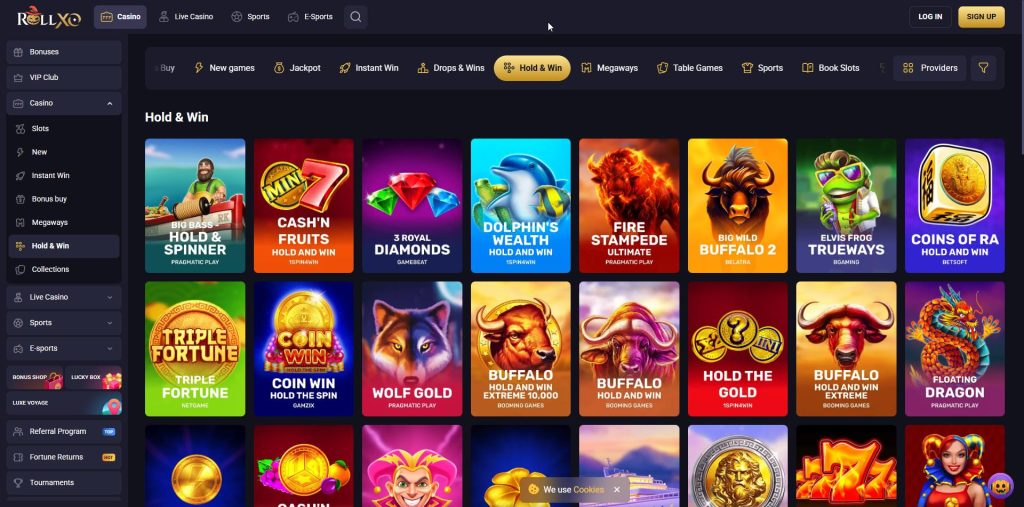
SlotLounge: Aloha King Elvis with a 35x requirement
Aloha King Elvis holds these rounds, and 35x is what the terms require against them. Thirty rounds make up the offer, BGaming carries the provider credit for the title, and LIZARD is published as the string for claiming.
No withdrawal cap is documented, and neither is the value behind one round, so both gaps describe the supplied record and nothing more. Between them they settle nothing about how far a payout might reach, nothing about what a single round commits, and nothing about whether a limit exists somewhere this material never went.
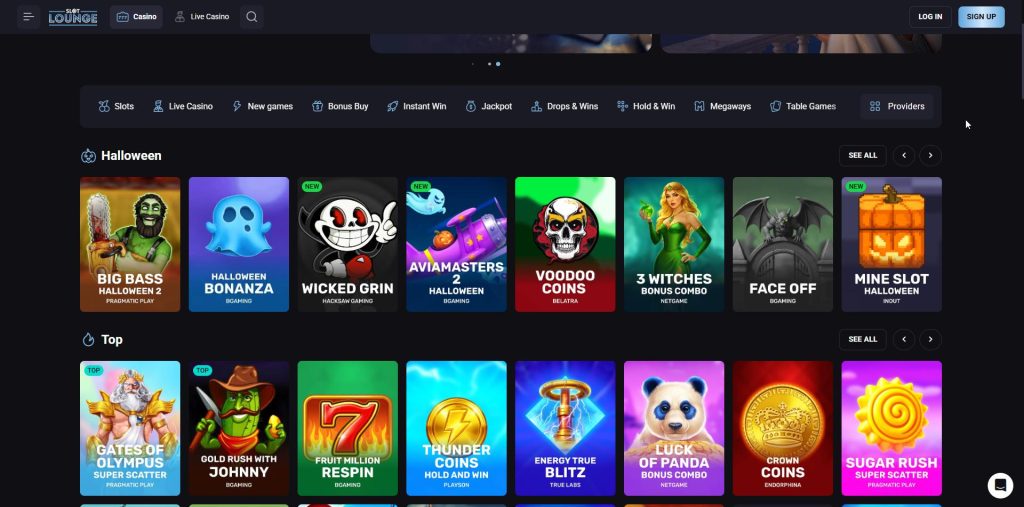
Slots Gallery: Wild West Trueways from Booming Games
Wild West Trueways is the title named here, with the provider credit going to Booming Games. Thirty rounds arrive on the code 30WW, the printed requirement is 40x, and CAD 150 stands as the published withdrawal cap.
One field goes undocumented throughout, which is the value behind a round. That keeps what a round commits inside this operator’s wording and clear of every calculation made here, leaving the entry to work with the fields set out above and no others.
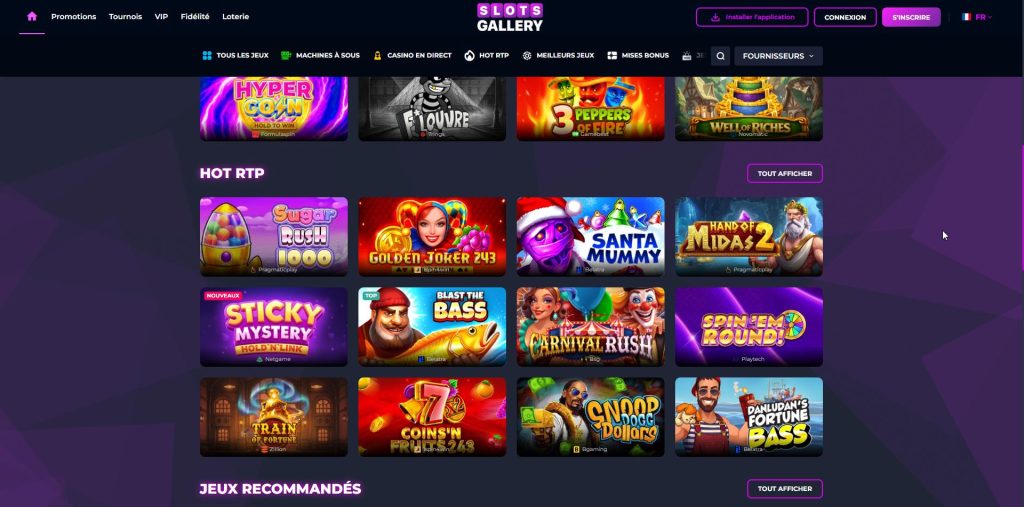
Ivibet: 50 spins on a Booming Games title
Fifty rounds in total are what this offer credits, with the provider credit for their slot going to Booming Games. The title is Miss Cherry Fruits Jackpot Party, and CAD 0.38 is what the terms record behind one round.
Its wagering condition reaches the page as wording rather than a numeral, and it stays that way, never converted into a figure and never ranged beside the eight numeric requirements in this set. Neither a withdrawal cap nor a promo code is documented here, and neither gap is filled in from the six brands whose terms do publish a string.

magic365: Panda Fortune Rush with a 45x requirement
Panda Fortune Rush holds the rounds here, with 45x printed as the requirement against them. Thirty rounds are credited at CAD 0.30 each, and the withdrawal cap this document publishes is CAD 8.
Not documented are the provider credit for that title and the promo-code field. Who is credited for the slot, and whether something must be typed in at the claim, therefore belong to this operator rather than to a page about it, and neither is settled by the brand alongside it in the list printing the same requirement figure.
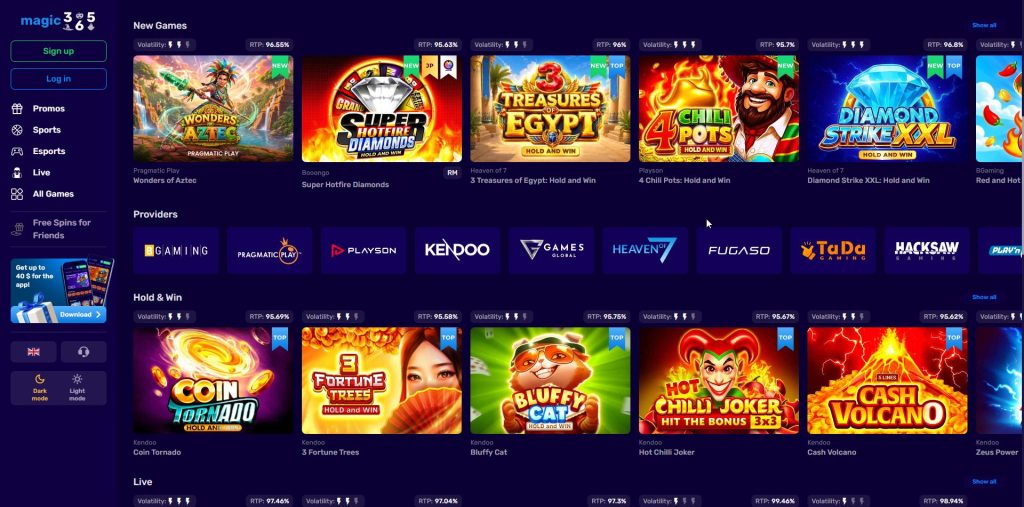
Slotsgem: Lady Wolf Moon Megaways at CAD 0.38 a spin
The slot named is Lady Wolf Moon Megaways, with CAD 0.38 recorded as what each of its rounds puts into play. Fifty rounds are credited altogether, and the provider credit goes to Booming Games.
As at one other brand in this set, words carry the wagering condition instead of a multiple, and it is reproduced word for word, which keeps it clear of every numeric comparison on the page. The record documents neither a withdrawal cap nor a promo code, so how far a payout could reach and what gets typed in at the claim both stay open.
V.Vegas: a 3x requirement on Book of Dead
The requirement printed for this offer is 3x, and Book of Dead is the slot these rounds belong to. Fifty of them are credited at CAD 0.30 apiece, Play’n GO carries the provider credit, and CAD 38 is the withdrawal cap these terms publish.
The promo-code field is not documented for this brand. That reports what the record holds and settles neither possibility, whether something must be typed in or nothing must, while the cap, the count and the value behind a round are the fields this document does settle.
| Casino | Free spins | Assigned game | Wagering | Promo code |
|---|---|---|---|---|
| Boho Casino | 30 | Fruit Million | 40x | FMIL30 |
| Fugu | 100 | not documented | 45x | FSBONUS100 |
| Martin Casino | 100 | Book of Ra Deluxe | 45x | FSBONUS100 |
| RollXO | 50 | Gold Rush with Johnny Cash | 50x | LUXE50 |
| SlotLounge | 30 | Aloha King Elvis | 35x | LIZARD |
| Slots Gallery | 30 | Wild West Trueways | 40x | 30WW |
| Ivibet | 50 | Miss Cherry Fruits Jackpot Party | condition written in words | not documented |
| magic365 | 30 | Panda Fortune Rush | 45x | not documented |
| Slotsgem | 50 | Lady Wolf Moon Megaways | condition written in words | not documented |
| V.Vegas | 50 | Book of Dead | 3x | not documented |
Four fields carry that comparison, each shown as its own operator published it. Counts land on 30, 50 and 100. Nine rows name a slot, and for one the assigned game is not documented. Eight print a wagering figure, while two set the condition down in words that stay in words. Six print a code, and for the other four the promo-code field is not documented.
No row is scored, ranked or weighed against another, and the two written conditions are never lined up beside the eight figures as though they belonged on one scale.
Where a cell reads not documented, the supplied material holds nothing for that field, which reports the record rather than the offer standing behind it. For a holder reading it now, entry and row together mark what the document settles and what is still sitting with the operator.
The ten offers grouped by free-spin count
Read on its own, a spin count answers a narrow question: how many promotional rounds the offer credits before anything else about it is taken into account. It is not a measure of what an offer is worth, because the figure behind one round, the requirement attached, the published cap and whichever slot the rounds belong to are all settled in separate clauses.
A hundred rounds is therefore not automatically a better position than thirty, and the grouping below is a count and nothing more.
| Free-spin count | Brands |
|---|---|
| 30 free spins | Boho Casino; magic365; SlotLounge; Slots Gallery |
| 50 free spins | Ivibet; RollXO; Slotsgem; V.Vegas |
| 100 free spins | Fugu; Martin Casino |
Three values cover the whole selection, with four brands at the lowest count, four in the middle and two at the highest. What the grouping does not do is sort the offers by anything a reader could spend: two brands in the same row can carry different figures behind a spin, different requirements and different ceilings, and the row says nothing about any of them.
How the ten offers were compared
The set was assembled from the supplied material rather than from any assessment of the brands in it, and the three rules below are the whole of the method. Nothing was weighted, nothing was scored, and no quality judgment entered the selection at any point.
Where a brand records less than an entry needs, it was dropped rather than completed out of a neighbouring document, which is why the ten are the ten. The same rule applied to individual fields inside an entry that did otherwise qualify.
| Criterion | What it covers |
|---|---|
| What qualified an offer | documented as credited without a deposit, with enough recorded fields for a complete entry |
| Which fields are compared | free spins, assigned game, wagering condition, promo code |
| How rows are ordered | code-documented brands first, then brands whose promo-code field is not documented, alphabetical inside each group |
Two further limits applied throughout, and both are visible in the table above. A condition published as wording was never turned into a numeric multiple, and a cap given in multiples of the credited bonus was never converted into cash, since either move would need an amount the material records nowhere. What results is a description of ten published documents, ordered by one documented field, and nothing in it ranks them.
Questions readers ask about a no deposit bonus
Can an offer be cancelled by the player once it has been credited?
Whether an active promotion can be dropped is settled by that offer’s terms and by whatever controls the account provides. Nothing in the material establishes one answer for every operator, so the wording decides it.
What happens to the spins that are left if the balance reaches zero?
The terms determine what stays active once a promotional balance is empty, and they do not all treat it alike. Some documents address the point. Where one does not, the operator resolves it.
Does withdrawing part of a balance change what the requirement still asks?
Partial requests are not available at every operator, and where they are, how one meets an open requirement is set by the published rules. No general rule is recorded, so neither is assumed.
Can a second offer be added while one is still running?
Whether two promotions can sit on an account together is decided by the terms attached to each of them. The material records no rule covering the question, so no general answer appears here.
Does play on a slot other than the assigned one count toward the requirement?
Two separate clauses bear on that. An assigned-game rule governs where the spins belong; game weighting governs what a stake registers against a requirement. No weighting rate appears in the record for these ten offers.
Is the stated figure recalculated if the balance grows?
A multiplier works on whichever amount the terms nominate, and that amount fixes the volume. A balance moving up or down does not change what the calculation uses. None of the ten records which amount applies.
What remains in the account after a requirement is satisfied?
That depends on whether the credited amount is cashable under the terms or reclaimed at conversion, as the individual offer draws it. No single outcome follows from meeting a requirement, and no figure is guaranteed.
Does a cap apply to one request or to the whole offer?
The wording of the cap is what measures it, and a clause can be drafted either way. Where a document does not say which it means, the operator is who answers that.
Can the conditions on an offer change while it is running?
The conditions a reader is held to are the ones published with that offer, and the operator’s terms are where any provision about changes would sit. No general rule is recorded, so none is asserted.
Does an unfinished requirement affect a withdrawal of the player’s own money?
Promotional value and transferred funds are recorded separately, and what an open requirement does to a request drawn on the second falls to the operator’s wording. No universal restriction is documented. The account’s terms settle it.
Which parts of the process does the player decide?
Whether to claim an offer, whether to keep playing, whether to request a payout and whether to use any available account controls are the holder’s calls. What the requirement asks, who qualifies and how far a request reaches are not.
Does a published code still matter once the offer is in the account?
A code works as the mechanism attaching an offer, so its work is done at that point. Whether it carries a further function afterwards is not recorded, and nothing of the kind is invented.
Does an account opened in another province work under different rules?
It can, since the framework applying where a holder lives is set locally and an offer’s own clause may name places separately. Those two questions sit in different documents. Neither is answered by a promotional page.
Mistakes to avoid while a no deposit bonus is active
The errors worth naming are the ones a published document actually addresses.
Entering a required code incorrectly, or outside the stage the terms name, can stop the documented activation route from completing as written. Playing beyond an assigned-game rule where one applies puts that play under whatever the exclusion clause in the same document provides.
Reading a stated figure as though it had already produced a volume of play, with no amount behind it, yields a number answering no question the document asks. That is the mistake most easily made from the comparison above, where eight figures sit in a column and not one of them carries its base.
Two further points come from the conditions running while an offer is open. Exceeding a maximum stake where an operator publishes one engages whatever that document attaches to the breach, which differs between operators and is documented for none of the ten brands above.
Overlooking a validity rule where one is published has the same shape: the window and its consequence sit in a single clause, and only that clause settles either. Neither is documented for the ten brands here.
One mistake happens before any of this. Registration details entered inaccurately can create a discrepancy when identity verification takes place, and what follows from that is for the operator’s own process to determine.
Not one of these errors is called a cancelled offer, voided winnings or a forfeited balance here, since the supplied material documents no such consequence for any of them, and what follows in a particular case is for that offer’s own terms to provide.
Staying in control and where to find help in Canada
Help in Canada is organised by province and territory instead of through one national service, so the useful first step is finding the right local body rather than a general number.
The resources the supplied material records appear below, each reached on its own number, with the country-wide directory listed first for a reader not yet sure which province’s service applies.
Nothing here describes what a service provides beyond the fact of its being listed, and no attribute is claimed for one of them that the material leaves unrecorded. The numbers are reproduced exactly as the material sets them down, and none of the six is presented as a substitute for another.
Responsible Gambling Council directory: the country-wide pointer toward provincial services.
ConnexOntario: 1-866-531-2600.
Gambling Support BC: 1-888-795-6111.
Alberta Health Services Addiction Helpline: 1-866-332-2322.
Manitoba Addictions Help Line: 1-800-463-1554.
Saskatchewan Problem Gambling Help Line: 1-800-306-6789.
Beside those services sit the controls an account may carry, set by the holder ahead of time. The supplied material notes several categories: a ceiling on transfers in over a stated period; bounds on time, or a time-out, where that control is documented; a prompt during a session; a log of earlier play, helpful when a pattern needs seeing rather than guessing at; and self-exclusion, run province by province instead of under one country-wide scheme.
Which of them a single operator provides, and under which conditions, rests with that operator, so none is claimed here for every account. The terms published with a promotion are where a holder checks what is on offer, and that check costs nothing beyond the reading of it.